Breast and OvarianGene

Breast and OvarianGene is a genetic test for women diagnosed with or at risk of breast and ovarian cancer which examines the DNA code of sixteen genes known to cause an increased risk of breast and ovarian cancer. It is performed on a saliva sample.

Find out if you are at increased risk of developing ovarian cancer with fast, accurate genetic testing and genetic counselling.

  • National network of registered genetic counsellors
  • Consultations by telephone or face-to-face
  • Genetic counselling is available before and after all genetic tests
  • Genetic testing may influence your surgical treatment, choice of chemotherapy and future cancer prevention
  • Expert genetic counsellors explain the testing process and provide you with all the information to help you make the choice that's right for you


1,400

* includes a one-hour phone consultation with a genetic counsellor.

Why should I book an ovarian cancer genetic testing appointment?

Genetic testing offers you a safe and accurate way of finding out if you have an increased risk of developing ovarian cancer. We offer a personalised service with pre- and post-test genetic counselling ensuring you are fully supported every step of the way.

Why should I book an ovarian cancer genetic testing appointment?
 

Frequently Asked Questions

What is hereditary ovarian cancer?

Ovarian cancer is the sixth most common cancer in women. In the general population, women have a 1.5% risk of ovarian cancer, with 75% being diagnosed after the age of 55. Most ovarian cancer occurs by chance, however up to 20% is hereditary and in some families, it may be possible to find the genetic change (pathogenic variant) which is responsible for the cancer. This allows appropriate cancer screening and risk- reducing options.

What are genes?

Genes are the body’s instructions and determine how the body develops and is maintained. Some genes prevent cancer developing: if there is a pathogenic variant in one of these cancer genes, then the gene doesn’t work correctly and causes an increased risk of cancer.  Pathogenic variants in several hundred genes can cause an increased risk to specific types of cancer. We also know that there must be other genes which are also associated with cancer that have not been identified yet.

How do I know if I am at risk?

Any individual with high grade serous ovarian cancer is eligible for genetic testing.

In addition families with hereditary ovarian cancer generally show one or more of the following clues:

  • Breast cancer diagnosed before the age of 45/bilateral breast cancer/male breast cancer
  • Jewish ancestry and a history of breast/ ovarian/prostate cancer
  • Bowel/womb cancer diagnosed at a young age (before the age of 50)
What genes we test

The following genes have been shown to be associated with ovarian cancer and are tested as part of OvarianGene:

  • ATM1
  • BARD1
  • BRCA1
  • BRCA2
  • BRIP1
  • CHEK2
  • EPCAM
  • MLH1
  • MSH2
  • MSH6
  • PALB2
  • PTEN
  • RAD51C
  • RAD51D
  • STK11
  • TP53    
How are these conditions inherited?

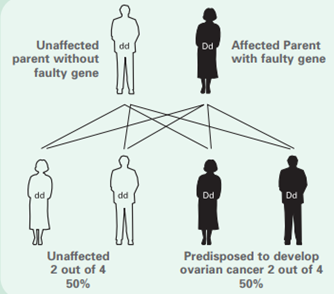
Genes come in pairs; we get one copy from our mother and one copy from our father. At present most cancer syndromes are inherited in a dominant pattern. This means that if someone has a pathogenic variant in one copy of a gene then there is a 50% chance that they will pass this onto their children. The risk of ovarian cancer can be inherited from either side of the family.

The diagram below illustrates this:

BRCA 1 2 Plus how are these conditions inherited

How can genetic testing help?

Genetic testing can help determine the best chemotherapies as well as to determine the risk of cancer within a family and guide appropriate cancer screening. Depending on the specific genetic risk different screening tests can be arranged and risk- reducing strategies can be considered.

What will the test show?

There are three possible results:

  1. A pathogenic variant is found in one of the genes which is known to increase the risk of ovarian cancer. Specific chemotherapy may be recommended if an individual has been diagnosed with cancer. Increased screening and/or risk-reducing techniques will be recommended.
  2. A genetic variant of uncertain significance is found, but whether this is the definite cause of cancer is unknown. Screening will be recommended based on the family history.
  3. No variant is found. It is possible that there may be an undetectable variant or a variant in a different gene. Cancer screening/risk reducing techniques may still be beneficial.
What does it mean if I have a pathogenic variant?

If you have a pathogenic variant this explains why you have developed ovarian cancer and means that you may benefit from specific treatments as well as possibly being at increased risk of other cancers. Your exact risks will depend on which gene pathogenic variant has been found. Extra screening and/or risk- reducing strategies will be discussed. It will also be possible to offer predictive testing to other people in your family to see if they also have the pathogenic variant.

Ovarian awareness

It is helpful for women to be aware of the signs of ovarian cancer which are:

  • Increased abdominal size/significant bloating that doesn’t come and go
  • Difficulty eating/feeling very full after a small meal
  • Abdominal/pelvic pain
  • Needing to pass urine more urgently or more frequently. 

Most of the time people with these signs will not have cancer but it is always important to get them checked out.

Other risk factors

Diabetes, endometriosis, and ovarian cysts may increase the risk of ovarian cancer. Exposure to asbestos also increases the risk of ovarian cancer. Childbirth, pregnancy and breast feeding lower the risk of ovarian cancer. Tubal ligation (female sterilisation) lowers the risk of ovarian cancer by 35%. In addition, oral contraceptives lower the risk of ovarian cancer by up to 50% when taken for 5 or more years.

Professor Andrew Beggs, Clinical Advisor for Bowel Cancer & Genetics

If you have had a type of cancer that could be caused by a genetic predisposition, or if you have a strong family history of cancer, genetic testing may be useful for you and your family.  If a gene variant is identified, this may affect your treatment options and provide information, to allow you to manage any future cancer risks accordingly. If the results are normal, this would provide reassurance for you and your family.

Find out more

t a